Climate
    • What We Know
    • What Can Be Done
    • Climate Primer
    • Podcast
    • Explainers
    • Climate Questions
    • For Educators
    • News
    • Events
    • Resources
  • Search
Search
MIT

Main navigation

    • What We Know
    • What Can Be Done
    • Climate Primer
    • Podcast
    • Explainers
    • Climate Questions
    • For Educators
    • News
    • Events
    • Resources
  • Search
PostMay 22, 2019

How scientists unraveled the mystery behind the return of a banned greenhouse gas

Approximately one year ago, scientists working with the National Oceanic Atmospheric Administration (NOAA) found that factories seemed to be producing CFC-11. Under the Montreal Protocol, this greenhouse gas was supposedly phased out in 2010. In this article, James Temple, MIT Technology Review’s senior editor for energy, reveals recent findings which suggest that factories in eastern mainland China are producing CFC-11 emissions. Advanced Global Atmospheric Gases Experiment (AGAGE) monitoring stations have allowed this gas to be tracked to the eastern edge of China.

Read the full article at: https://www.technologyreview.com/s/613566/how-scientists-unraveled-the-…

Image by: Advanced Global Atmospheric Gases Experiment (AGAGE)

by MIT Technology Review
Topics
Energy

Related Posts

PostNovember 17, 2026

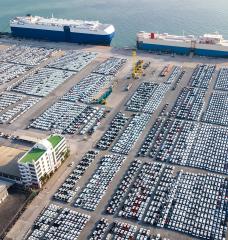
Tariffs, Global Value Chains, and the Incidence of Protection: Evidence fro...

MIT Center for Energy and Environmental Policy Research
PostNovember 2, 2026

Powering up for a pivotal moment

MIT Energy Initiative
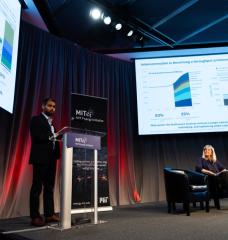
At the 2026 Energizing@MIT: MITEI’s Annual Research Conference, MITEI principal research scientist Deepjyoti Deka (left) presented his Seed Innovation Fund project on accelerating energy planning in the era of data centers through generative AI.
PostOctober 28, 2026

3 Questions: Why infrastructure is entering a defining era

MIT Civil and Environmental Engineering
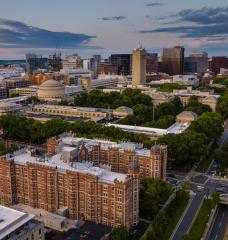
“Designing infrastructure is a highly transdisciplinary, sociotechnical endeavor, involving social, technical, and economic considerations. Understanding how these systems are designed is increasingly important because they are becoming more complex, making decision-making particularly difficult,” says Ali Jadbabaie, JR East Professor and head of the Department of Civil and Environmental Engineering.
PostOctober 26, 2026

At New York Climate Week 2026, MIT connects with a global network

MIT News
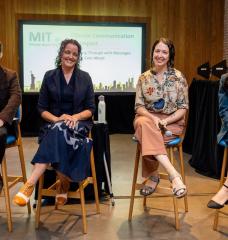
Aaron Krol, managing editor of the MIT Climate Change Engagement Program, led MIT’s Climate Week NYC session “Climate Communication for Impact,” which featured (left to right) Allison Crimmons of Talking Climate, Arielle Tannenbaum of Climate Central, and Mallika Talwar of Yale University.

MIT Climate Knowledge in Your Inbox


MIT Groups Log In

Log In

Footer

  • About
  • Terms & Conditions
  • Privacy Policy
  • Accessibility
  • Contact
MIT Climate Project
MIT
  • Instagram
  • TikTok
  • YouTube
  • Simplecast
Communicator Award Winner