Over the first weekend of November, the MIT Energy Club hosted its fourth annual MIT EnergyHack, a three-day event focused on bringing together students from vastly different backgrounds to develop innovative solutions to challenges in the energy industry.
Over 100 hackers flew across the United States and around the world to compete in the event (formerly known as the MIT Energy Hackathon), including 35 students from China. With many local students in attendance, nearly 40 teams competed in the EnergyHack’s semifinal round.
MIT Energy Club members Liam Fenlon and Zachary Schiffer directed this year’s EnergyHack, which was themed “Hack Sustainability.” Every challenge provided by the EnergyHack’s corporate partners centered on sustainability issues in the energy sector.
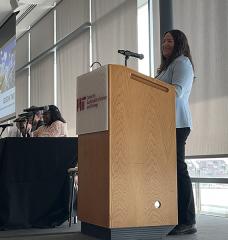
The first day consisted of welcome presentations and company background presentations in a packed lecture hall in the Stata Center. The night’s keynote speaker was Edwin Suarez, director of talent, technology, and innovation at Marathon Oil.
“To attract the best talent, we [Marathon] have to innovate,” Suarez said.
After the keynote speech and presentation of challenge statements from companies, event participants had an opportunity to meet other participants, form teams, and network with companies over dinner. Many hackers arrived to the event without pre-formed teams, but were able to connect with other participants pursuing the same challenge.
This year, the Energy Club worked with 11 companies and organizations to create problem statements for the EnergyHack, each based on a problem facing the energy industry. Companies that submitted problem statements included Cimetrics, Customer First Renewables, Avangrid, Marathon Oil, MassCEC, McKinsey, the MIT Office of Sustainability, NICE, Schneider, Candor Energy, and WiTricity.
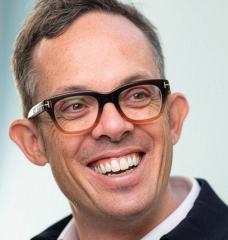
“Even if hackers can only tackle 1 percent of these problems over the course of the weekend, then there is a lot of value in that for companies,” said Liam Fenlon, co-director of the MIT EnergyHack and a junior in the Sloan School of Management. “They [hackers] have just shed new light onto an existing problem and will be able to look at things in a way that companies weren’t able to before.”
Most teams hacked through the night on Friday, working in the Stratton Student Center (Building W20) or in classrooms across campus. Saturday consisted mostly of hacking from 8 a.m. to midnight, but hackers took breaks throughout the afternoon to have conversations with companies stationed in Lobdell Dining Hall.
On the final day of the event, teams submitted their work and prepared for the semifinal round. Each team developed an e-poster presentation to pitch to as many as four judges, followed by a brief Q&A session. Judges evaluated presentations on their content, validity, and feasibility.
Only five teams of the entire MIT EnergyHack advanced to the Grand Finals. One winner was selected for each challenge, and three overall winners were selected for the Grand Finals.
Taking first place overall was team Solaris, which pursued Schneider Electric’s challenge. Solaris developed an innovative approach to green and energy efficient buildings, and was awarded a $2,000 cash prize. The second and third place winners were the Mean Green Machine and MasSave. They tackled the challenges provided by the MIT Office of Sustainability challenge and McKinsey & Company, and took home prizes of $1,500 and $1,000, respectively.
After prizes were awarded, Fenlon reflected on the people EnergyHack brings together and the outstanding work produced. The event attracts hackers of all disciplines — from engineers to business students — to solve and tackle real-world energy industry problems.
“I think what’s great about the challenges that we have is that no matter what your interests are or your background, there is something for you to tackle at the EnergyHack,” he said.