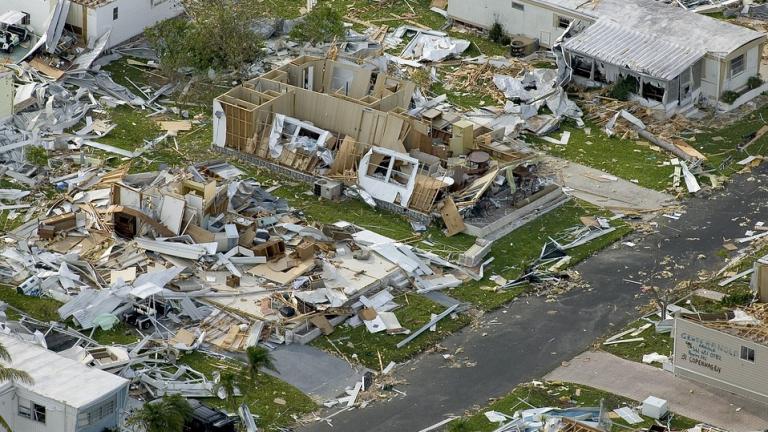
Year after year we witness earthquakes, floods, tornados, hurricanes, and blizzards. And, these events seem to be happening more frequently. We are aware of slow-cooking human disasters on the horizon such as sea level rise, glacier melting, and extreme weather patterns attributed to climate change.
Disasters can be the result of natural phenomenon (earthquakes, tsunamis, floods, landslides, hurricanes, and other natural events) human error (BP oil spill), disease (Ebola in Africa/Cholera in Haiti) and, more frequently, conflict and terrorism (Boston Marathon Bombing). We can look to the tsunami disasters in Japan and Banda Ache, the 2010 earthquakes in Haiti and Chile, the hurricanes of Katrina and Rita in the US city of New Orleans for examples of disasters that have leveled cities and brought about rethinking and massive replanning efforts. What lessons have we learned about our abilities to pre-plan, respond, and our abilities to offer sustainable, capacity-building approaches? What do we know about response, planning and assessment?
This class is designed to expose you to the cycles of disasters, the roots of emergency planning in the U.S., how to understand and map vulnerabilities, and expose you to the disaster planning in different contexts, including in developing countries.
The overall objectives of this class are as follows:
- Understand the role of the various phases of disaster management and issues concerning planning and policies in these phases.
- Understand emergency management from a planning and policy perspective.
- Delineate the role of the federal, state, and local governments in disaster planning and policies.
- Expose the international context, roles, and various responses and responders.
- Define mitigation planning and policy strategies.
- Expose students to emergency management and related plans.
- Understand the factors affecting short and long-term recovery and rebuilding and the role of planners and policy-makers.
- Understand the factors that give rise to disaster vulnerabilities (e.g., natural, physical, social, economic, policies, and governance.)
- Understand the factors that give rise to different vulnerabilities and levels of community resilience.
- Knowledge and capabilities to assess and manage these vulnerabilities through disaster planning and policy-making.
- Data, methods, tools, including exposure to GIS techniques that can enhance vulnerability assessments and knowledge building.
- Competencies to use mapping in mitigation planning and response operations.
Access the course materials: https://ocw.mit.edu/courses/urban-studies-and-planning/11-027-global-cityscope-disaster-planning-and-post-disaster-rebuilding-and-recovery-spring-2017/index.htm
Taught By: Cherie Miot Abbanat

![The “New World of Weather” project, one of MIT’s five Climate Grand Challenges announced in 2022, is “advancing the science, technologies, and practical strategies needed to help communities anticipate [extreme weather] and build greater resilience,” says MIT Vice President for Energy and Climate Evelyn Wang.](/sites/default/files/styles/teaser_mini_image/public/post-images/mit-climate-cyclone.jpg?itok=KwBU2suI)