Climate
Search

Main navigation

  • Climate 101
    • What We Know
    • What Can Be Done
    • Climate Primer
  • Explore
    • Podcast
    • Explainers
    • Climate Questions
    • For Educators
  • MIT Action
    • News
    • Events
    • Resources
  • Search
MIT

Main navigation

  • Climate 101
    • What We Know
    • What Can Be Done
    • Climate Primer
  • Explore
    • Podcast
    • Explainers
    • Climate Questions
    • For Educators
  • MIT Action
    • News
    • Events
    • Resources
  • Search
PostJuly 8, 2021

The fracking boom is over. Where did all the jobs go?

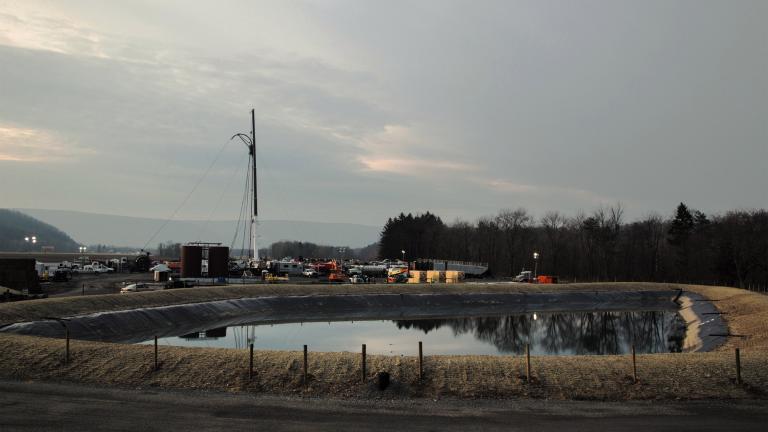
Fracking pool

Shale gas and oil extraction, also known as fracking, is often credited by conservatives with creating hundreds of thousands, if not millions, of US manufacturing jobs. As the “Saudi Arabia of natural gas,” Pennsylvania has been the poster child for the fracking industry. But far fewer jobs were created there and in neighboring states like Ohio than boosters claim, and many have since vanished, writes Colin Jerolmack for the MIT Technology Review.

Read the full article at: https://www.technologyreview.com/2021/07/01/1027822/fracking-boom-jobs-industry/

Image credits: Jim West / Alamy

by MIT Technology Review
Topics
Energy
Fossil Fuels
Government & Policy

Related Posts

PostJuly 1, 2026

Advancing a scenario-based modeling framework for long-term land-use planni...

MIT Center for Sustainability Science and Strategy
Mississippi River watershed
PostJune 30, 2026

How Uncertainty Shapes Electricity Storage Decisions

MIT Center for Energy and Environmental Policy Research
PostJune 30, 2026

MIT researchers advance toward greater bandwidth, more energy-efficient com...

MIT News
FUTUR-IC, funded by the National Science Foundation Convergence Accelerator, was created to address resource-efficiency issues. For example, integrating photonics with the electronics that underpin today’s microchips could address energy use because the transmission, or communication of data, using light is much more energy efficient.
PostJune 26, 2026

How data centers can better manage energy use

MIT News
“There are two dimensions that data centers have to make decisions about,” Christopher Knittel says. “One is how much of their load in any one time period is flexible. And two, how many hours, plus or minus, can they move that computation?”

MIT Climate Knowledge in Your Inbox


MIT Groups Log In

Log In

Footer

  • About
  • Terms & Conditions
  • Privacy Policy
  • Accessibility
  • Contact
MIT Climate Project
MIT
  • Instagram
  • TikTok
  • YouTube
  • Simplecast
Communicator Award Winner