Climate
Search

Main navigation

  • Climate 101
    • What We Know
    • What Can Be Done
    • Climate Primer
  • Explore
    • Podcast
    • Explainers
    • Climate Questions
    • For Educators
  • MIT Action
    • News
    • Events
    • Resources
  • Search
MIT

Main navigation

  • Climate 101
    • What We Know
    • What Can Be Done
    • Climate Primer
  • Explore
    • Podcast
    • Explainers
    • Climate Questions
    • For Educators
  • MIT Action
    • News
    • Events
    • Resources
  • Search
PostMay 26, 2026

A day in the life of MIT Sloan Fellow Alecia Asiamigbe

One day with MIT Sloan Fellow Alecia Asiamigbe
Photo Credit
Photo: Kelly Davidson
Alyssa Loebig

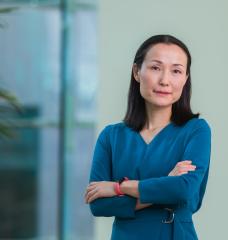
“I came to MIT Sloan intent on joining a vibrant ecosystem for entrepreneurship and leadership development,” says Alecia Asiamigbe, an MIT Sloan Fellow and MBA student in the MIT Sloan School of Management who is graduating this week.

Before coming to MIT Sloan, Asiamigbe worked as an energy and infrastructure professional with over 20 years of leadership experience, delivering complex energy infrastructure solutions.

It was MIT Sloan’s work to embed sustainability in new ventures that attracted Asiamigbe. Additionally, the MIT Sloan Fellows program gave her the opportunity to earn an MBA in one year. “I was anchored to my choice by the Disciplined Entrepreneurship framework and the potential to focus on climate and energy entrepreneurship.”

Currently, Asiamigbe is working to build out a sustainability-focused venture, Resilient Grid, a renewable energy company that aims to convert organic waste into sustainable natural gas able to produce reliable, dispatchable renewable power in fuel import-dependent markets. Its modular systems reduce reliance on imported fuels, lower energy costs, and stabilize grids where solar and wind alone are insufficient. By capturing methane, diverting waste from landfills, and producing useful byproducts, it delivers measurable impact across energy security, emissions reduction, and circular economic development.

“My work in sustainability is deeply rooted in my need to give back to the community and to be an agent for systems-level change. We must solve the dual challenge of providing access to opportunities to innovate and build for those not currently in the loop, while also stopping the damage currently being done to the planet. Knowing that we want better for our grandchildren, what will we do differently?”

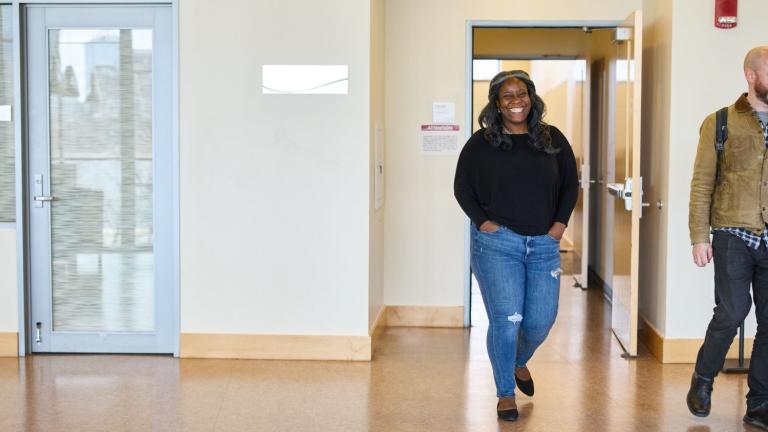
The following photo gallery provides a snapshot of what a typical day for Asiamigbe has been like at MIT.

by MIT News
Topics
Education
Energy
Food, Water & Agriculture
Waste

Related Posts

PodcastJuly 2, 2026

E9: Dry spells and downpours

Ask MIT Climate Podcast
Ask MIT Climate
PostJuly 1, 2026

Advancing a scenario-based modeling framework for long-term land-use planni...

MIT Center for Sustainability Science and Strategy
Mississippi River watershed
PostJune 30, 2026

How Uncertainty Shapes Electricity Storage Decisions

MIT Center for Energy and Environmental Policy Research
PostJune 30, 2026

MIT researchers advance toward greater bandwidth, more energy-efficient com...

MIT News
FUTUR-IC, funded by the National Science Foundation Convergence Accelerator, was created to address resource-efficiency issues. For example, integrating photonics with the electronics that underpin today’s microchips could address energy use because the transmission, or communication of data, using light is much more energy efficient.

MIT Climate Knowledge in Your Inbox


MIT Groups Log In

Log In

Footer

  • About
  • Terms & Conditions
  • Privacy Policy
  • Accessibility
  • Contact
MIT Climate Project
MIT
  • Instagram
  • TikTok
  • YouTube
  • Simplecast
Communicator Award Winner