Climate
Search

Main navigation

  • Climate 101
    • What We Know
    • What Can Be Done
    • Climate Primer
  • Explore
    • Podcast
    • Explainers
    • Climate Questions
    • For Educators
  • MIT Action
    • News
    • Events
    • Resources
  • Search
MIT

Main navigation

  • Climate 101
    • What We Know
    • What Can Be Done
    • Climate Primer
  • Explore
    • Podcast
    • Explainers
    • Climate Questions
    • For Educators
  • MIT Action
    • News
    • Events
    • Resources
  • Search
PostMarch 27, 2019

Center for Coalfield Justice: social and environmental justice summer internship

MIT students, are you looking for a summer internship? Join the Center for Coalfield Justice team this summer as an intern and work directly with communities on the frontline of fossil fuel extraction and use. During your internship, you will assist our team with planning several events, tabling at community gatherings to get input from residents about the future of Greene County's economy, and plan actions to hold energy companies and government accountable.

Start/end dates can be flexible. 

Click here for more information (must log in with Kerberos)

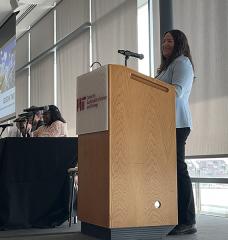
Image from Center for Coalfield Justice

by MIT Environmental Solutions Initiative
Topics
Finance & Economics
Education
Energy
Transportation

Related Posts

PostJuly 7, 2026

Hydrogen: clean fuel of the future — if we can find a cheap and clean way...

MIT Energy Initiative
The Hydrogen Carrier Analysis Tool (HyCAT), developed by a MITEI-led team, helps users determine the costs and carbon emissions incurred when transporting and delivering hydrogen fuel.
PodcastJuly 2, 2026

E9: Dry spells and downpours

Ask MIT Climate Podcast
Ask MIT Climate
PostJune 30, 2026

How Uncertainty Shapes Electricity Storage Decisions

MIT Center for Energy and Environmental Policy Research
PostJune 30, 2026

MIT researchers advance toward greater bandwidth, more energy-efficient com...

MIT News
FUTUR-IC, funded by the National Science Foundation Convergence Accelerator, was created to address resource-efficiency issues. For example, integrating photonics with the electronics that underpin today’s microchips could address energy use because the transmission, or communication of data, using light is much more energy efficient.

MIT Climate Knowledge in Your Inbox


MIT Groups Log In

Log In

Footer

  • About
  • Terms & Conditions
  • Privacy Policy
  • Accessibility
  • Contact
MIT Climate Project
MIT
  • Instagram
  • TikTok
  • YouTube
  • Simplecast
Communicator Award Winner