Climate
    • What We Know
    • What Can Be Done
    • Climate Primer
    • Podcast
    • Explainers
    • Climate Questions
    • For Educators
    • News
    • Events
    • Resources
  • Search
Search
MIT

Main navigation

    • What We Know
    • What Can Be Done
    • Climate Primer
    • Podcast
    • Explainers
    • Climate Questions
    • For Educators
    • News
    • Events
    • Resources
  • Search
PostJune 23, 2020

4 lessons from COVID-19 to help fight climate change

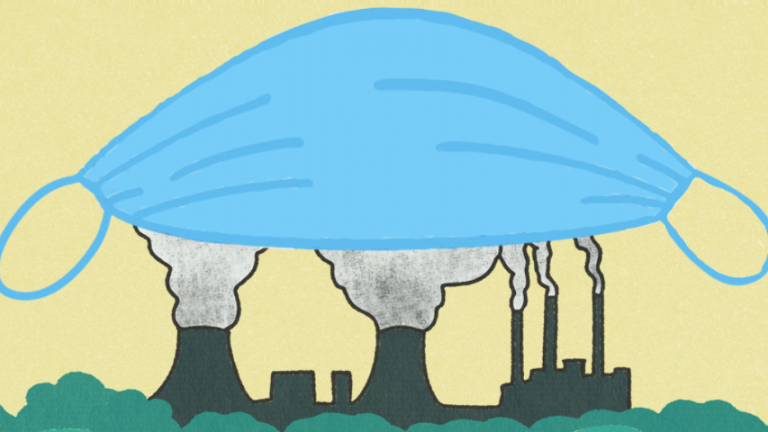
The coronavirus and climate change are two urgent, global health and economic emergencies. Here’s how our response to one can inform the other.

It’s hard to find positives amid the wreckage of COVID-19, but there is one silver lining. The lockdown has slowed climate change: cutting fossil fuel use, air pollution, and greenhouse gas emissions.

How can we retain this COVID-era benefit in a post-pandemic world? MIT Sloan Professor and director of the MIT Sloan Sustainability Initiative, John Sterman explored these issues in a recent webinar, “COVID and Climate Change: Lessons and Opportunities.”

So what do COVID and climate change have in common?

Read the four points Professor Sterman outlines here: https://mitsloan.mit.edu/ideas-made-to-matter/4-lessons-covid-19-to-help-fight-climate-change 

Written by Kara Baskin, MIT Sloan 

by MIT Sloan Sustainability Initiative
Topics
Finance & Economics
Humanities & Social Science
Education
Energy
Food, Water & Agriculture
Health & Medicine
Government & Policy
Transportation

Related Posts

PodcastOctober 8, 2026

E11: Data centers and the race to power AI (part 2)

Ask MIT Climate Podcast
Ask MIT Climate
PodcastOctober 8, 2026

E10: Data centers and the race to power AI (part 1)

Ask MIT Climate Podcast
Ask MIT Climate
PostSeptember 21, 2026

Environmental Ambition and Economic Protectionism: The Design of Border Car...

MIT Center for Energy and Environmental Policy Research
Aerial view of Steel Plant Industry in Scunthorpe, UK
PostSeptember 21, 2026

Batteries that safely break down in the GI tract could improve ingestible d...

MIT News
Using materials that are safe for human consumption, MIT researchers have created tiny batteries that could be used to power ingestible electronic devices. The entire battery is bioresorbable, meaning that it can be fully broken down and absorbed by the body.

MIT Climate Knowledge in Your Inbox


MIT Groups Log In

Log In

Footer

  • About
  • Terms & Conditions
  • Privacy Policy
  • Accessibility
  • Contact
MIT Climate Project
MIT
  • Instagram
  • TikTok
  • YouTube
  • Simplecast
Communicator Award Winner