Climate
    • What We Know
    • What Can Be Done
    • Climate Primer
    • Podcast
    • Explainers
    • Climate Questions
    • For Educators
    • News
    • Events
    • Resources
  • Search
Search
MIT

Main navigation

    • What We Know
    • What Can Be Done
    • Climate Primer
    • Podcast
    • Explainers
    • Climate Questions
    • For Educators
    • News
    • Events
    • Resources
  • Search
PostOctober 4, 2023

2023 Climate Tech Companies to Watch: Gogoro and its scooter and battery pack network

a Gogoro scooter
Photo Credit
Gogoro

It’s hard to put a label on Gogoro’s business. Is it an electric scooter manufacturer? Check. A third-party battery manufacturer for the scooter and personal vehicle industry? That too. A network of grab-and-go battery-charging stations that enables some 400,000 battery swaps per day, and can return power to the grid during peak usage hours? Sure. But wait, there’s more.

Gogoro makes not only scooters but also the batteries that power them. In addition to the company’s own vehicles, its batteries are found in scooters from Yamaha and Suzuki, among others. It also maintains a fleet of on-demand scooters that people can rent, similar to a bike-sharing system. But the star of its show is the smart battery station.

Gogoro now has nearly 13,000 smart battery swapping stations at 3,000 locations in the nine countries where it operates. In Taiwan’s cities there are now more places to swap out a Gogoro battery than there are to fill up with gas. For a subscription that starts at about $20 per month, its customers can exchange batteries from their scooters as often as they need. 

Read the full story at MIT Technology Review.

by MIT Technology Review
Topics
Batteries, Storage & Transmission
Electrification
Transportation

Related Posts

PostNovember 17, 2026

Tariffs, Global Value Chains, and the Incidence of Protection: Evidence fro...

MIT Center for Energy and Environmental Policy Research
PostOctober 18, 2026

Giving AI a “crystal clear” view of the materials world

MIT News
MIT researchers created an AI model that can identify optimal crystalline materials for various applications.
PostOctober 15, 2026

State of Supply Chain Sustainability Report finds corporate commitment at r...

MIT Center for Transportation and Logistics
In the 2026 State of Supply Chain Sustainability report, 83 percent of respondents rate sustainability as important or very important to long-term business success, the highest level in the report's seven-year history. But commitment is not the same as capacity.
PostSeptember 21, 2026

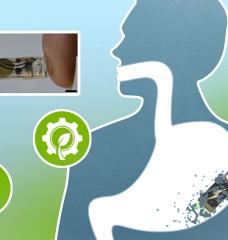
Batteries that safely break down in the GI tract could improve ingestible d...

MIT News
Using materials that are safe for human consumption, MIT researchers have created tiny batteries that could be used to power ingestible electronic devices. The entire battery is bioresorbable, meaning that it can be fully broken down and absorbed by the body.

MIT Climate Knowledge in Your Inbox


MIT Groups Log In

Log In

Footer

  • About
  • Terms & Conditions
  • Privacy Policy
  • Accessibility
  • Contact
MIT Climate Project
MIT
  • Instagram
  • TikTok
  • YouTube
  • Simplecast
Communicator Award Winner